Finding the Past in Paper and Pixels

Decades of archives, burnout, and ditching online noise to pursue offline creativity, travel, and a slower, intentional life abroad.

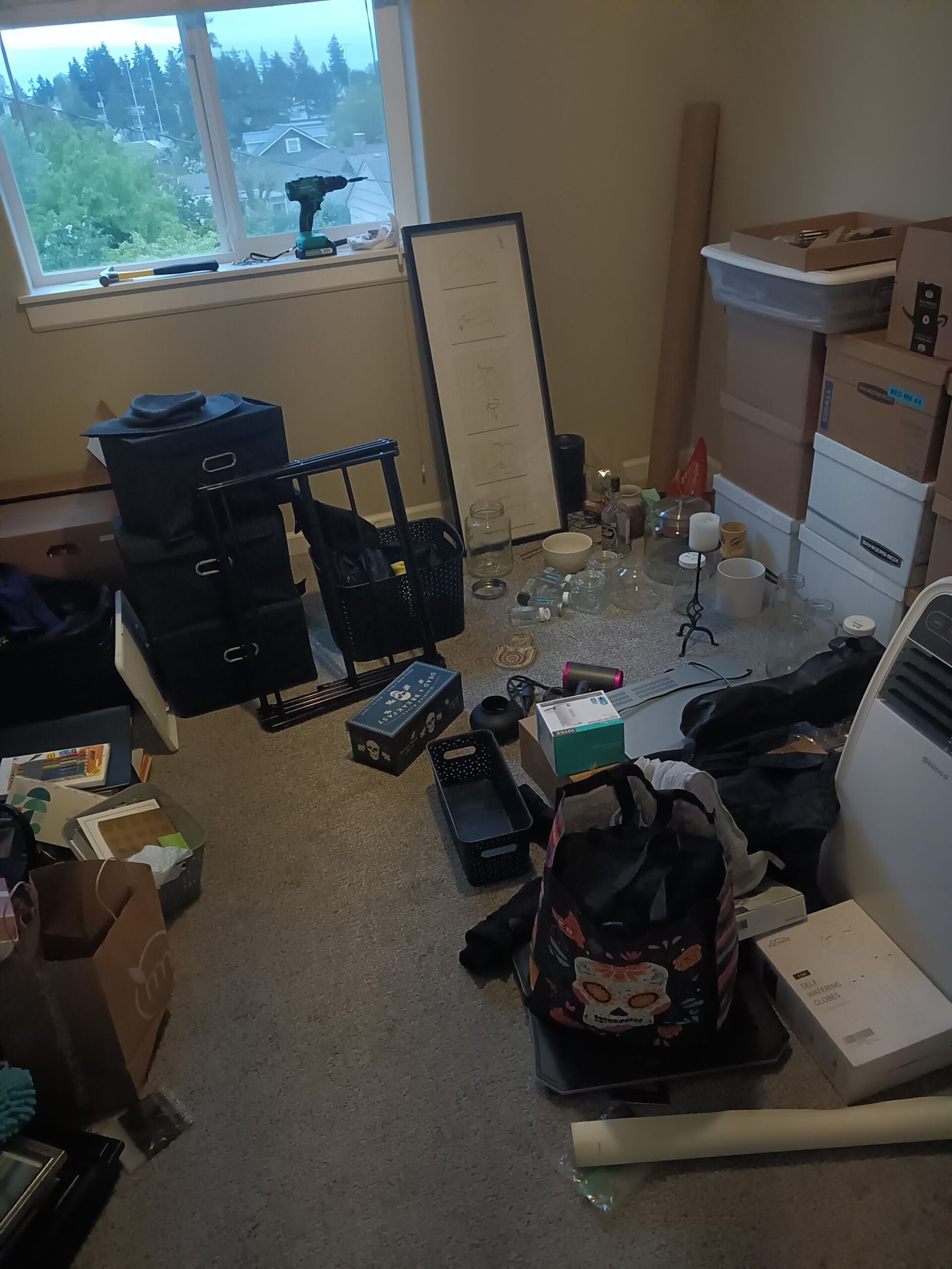
While packing for our move, I dug through boxes that span back to high school—friend‑written stories, doodles, poetry, slang lists, and word‑play games. I also uncovered every college paper, notebook, and printed email chain from the late‑‘90s through the birth of my son and the completion of my first master’s degree, along with articles, notes, old résumés, and CVs. After the mid‑2000s, everything shifted to digital storage.

Looking at those old emails, sketches, and lists, I’m struck by two things: the passion and ambition that drove me, and the scatter‑shot nature of my attention. Many projects were left unfinished, books unread, ideas half‑formed.

In my thirties, when parenthood, a full‑time career, and a second graduate degree converged, burnout set in. Digital copies multiplied, but they came with no guarantees: hard drives failed, email providers changed with each job, platforms vanished, and search tools proved unreliable. Economic shifts forced priorities, and a lot of content slipped away, leaving some dreams deferred.

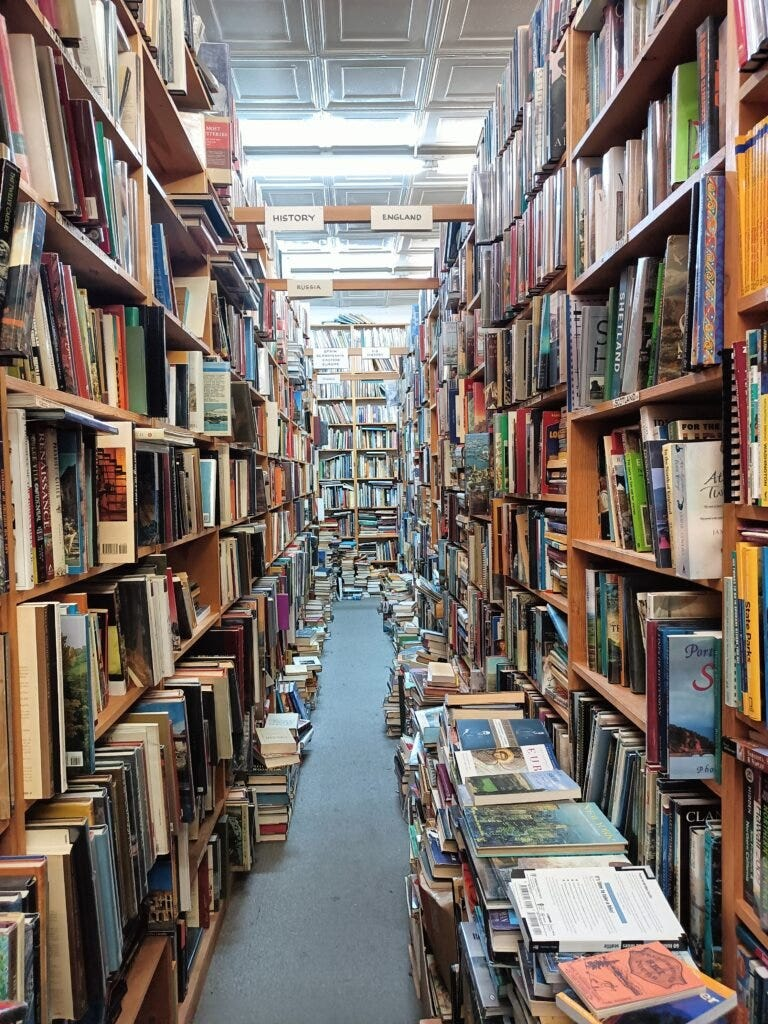
My forties were spent in tech, raising my son, paying off debt, and moving out of state. Burnout lingered, yet surrounded now by my late father’s notebooks, my own archives, and our library, I was reminded that there is more than enough to explore and immerse myself in—whether or not I pursued professional work for others. The abundance of material, both personal and inherited, offers endless possibilities, giving me a sense of purpose beyond employment.

That realization has also changed how I approach time. I’ve begun curbing the habit of “frittering” my hours online, endlessly consuming other people’s content. There’s a lingering belief that deep focus on reading, drawing, or studying makes me “unavailable” to my family—or that I’m merely “escaping” rather than being productive. That judgment feels almost Protestant‑era, reminiscent of the way Jane Austen’s characters are scrutinized for their choices.

For years, I equated online activity—social media posts, chats, data exchanges—with being “social” and “real.” I treated the digital realm as if it were as tangible as a café table or a sketchbook—its fleeting likes and comments offering instant, almost physical feedback, feeding my craving for connection and validation, even though all I was really producing was a paycheck for the platforms.

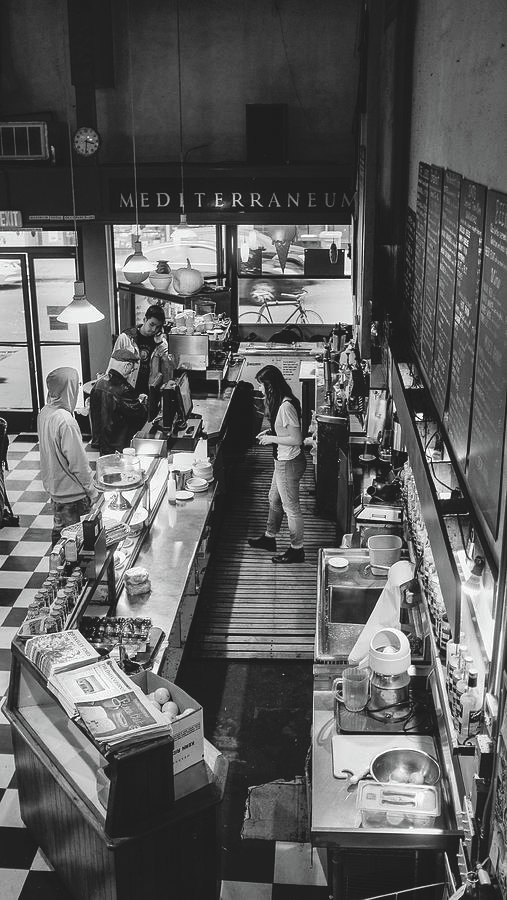
But it wasn’t just the lure of the screen; it was also the loss of a social ritual that had shaped my youth. After the turn of the millennium, cafés stopped feeling like true gathering places. Today, when I step into one, most people are glued to laptops or phones, each lost in their own online world.

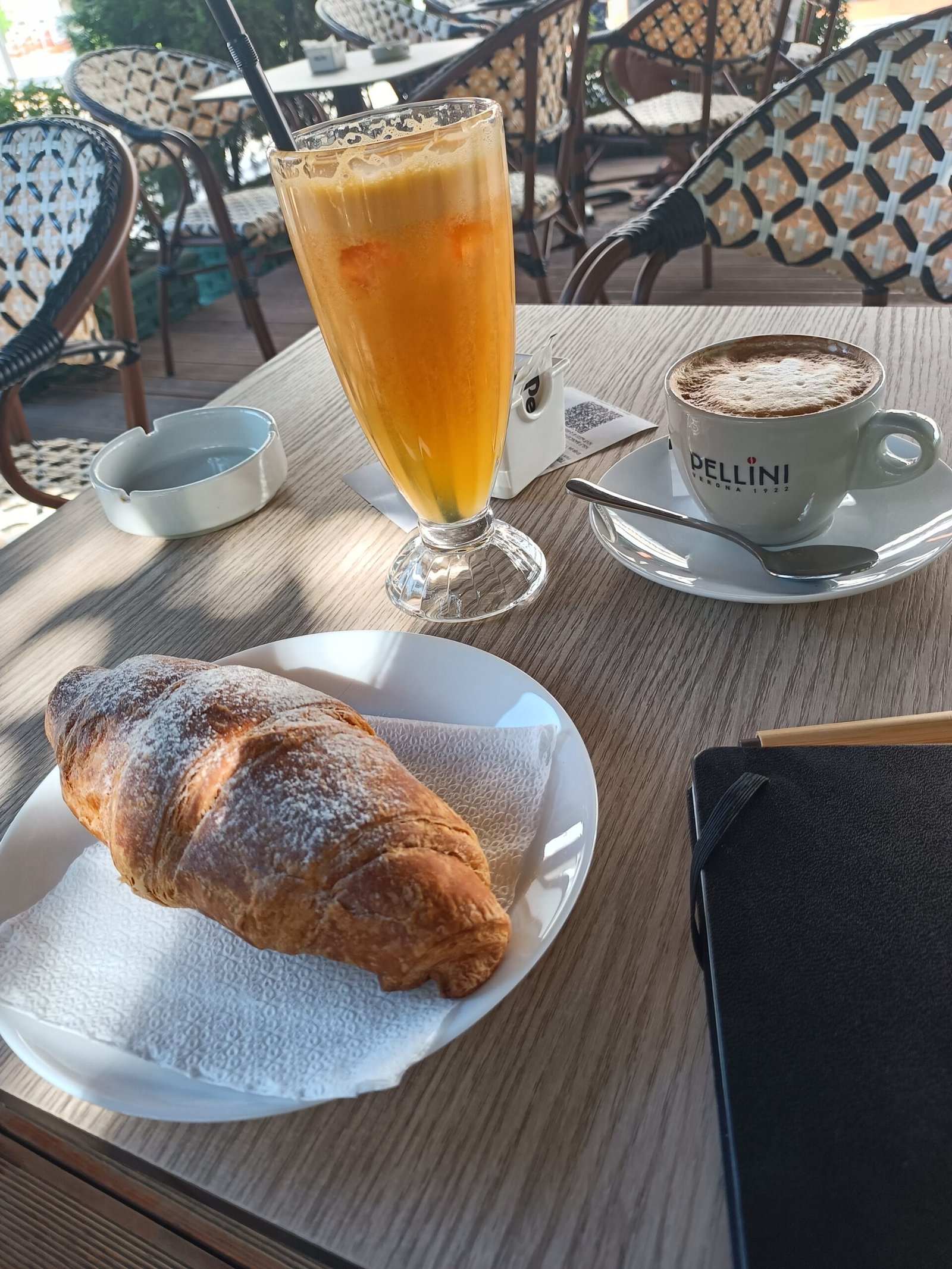
I miss the 1990s, when a trip to a café meant meeting friends, lingering over espresso, and talking for hours while the hum of the grinder provided a soundtrack. That café culture—the spontaneous conversation, the clink of cups, the shared silences—was a touchstone of my upbringing.

It’s exactly that experience I’m eager to rediscover when I move to Europe. My plan is simple: I’ll spend my days reading, writing, and making art in cafés. I’ll revisit my archives, travel, write about exhibitions and performances, and finally give those unfinished projects a chance to breathe. Surrounded by both my own work and the material I inherited, I know there will always be enough to keep me absorbed, on my own terms.

NOTES:

If you enjoy my writing here, you might also like some of my other projects:

  • 💡 I have a Patreon where I share extra writing, behind-the-scenes notes, and updates on creative projects. You can check it out here.
  • 📖 I recently self-published my MA thesis on Butoh, which is available here. If you’re curious about performance, embodiment, and cultural history, I’d love for you to read it.
  • 💸 Or, if you’d like to give a smaller one-time tip ($3), you can do so via Ko-fi [here]. Every bit of support helps and is greatly appreciated!

Trying to Live Locally in an Unlivable Economy

On cafés, creativity, and the rising cost of staying human.

Some might argue that where we moved in the PNW was already “walkable.” And maybe it was — on paper. But walkability doesn’t mean much when the U.S. has become unaffordable for anyone not earning six figures. I’ve lost count of how many tech and federal jobs were purged in the past year alone. It doesn’t matter if you can stroll through a lovely historic neighborhood to a juice bar or wine bar if you can’t afford $18 for a green juice plus tax and tip — or $30 per person for “happy hour.”

Food prices are up (thanks, tariffs). Rent is up (thanks, corporate investors). Wages are flat. Unemployment is climbing. The math no longer works.

So how does one keep a travel blog — one that encourages exploration and support of local businesses — without actively participating in gentrification? When I was growing up, I watched adults who didn’t appear especially wealthy or bougie spend their days in cafés, theaters, and bookstores. They read. They made art. They lingered. And they seemed able to live that way for years. I might get a year or two before the cost of living caught up with me, forcing another move in search of affordability.

I applaud my Democratic Socialist neighbors who are fighting to preserve stability and sustainability in a world increasingly driven by greed, resource wars, and labor exploitation. Communities everywhere are asking the same questions: how do we elect leaders who will prioritize health, education, infrastructure, and housing over courting monied investors who have no real stake in the lives of the people who live there?

My goal has always been modest. I want space in my life to read in cafés, to write, to make art — and to earn enough to buy food from local markets and support local restaurants, artists, and musicians. The ambitions of tech and property-owning overclasses go far beyond meeting their needs. They seek to scale endlessly, to build empires and asset portfolios. That way of living feels utterly alien to me.

Historically, the artistic and bohemian classes resisted being lumped in with aristocracy, even when those born into means were often the only ones who could afford the time to create. That tension hasn’t disappeared — it’s hardened.

I’m a strong proponent of Universal Basic Income, especially for the creative class. I’m equally opposed to platforms that underpay artists, musicians, and writers while siphoning millions to advertisers and executives feeding off our labor, content, and data. The same corporate model loves to vilify younger people for opting out — or creatives for daring to sit in public with a caffeinated drink — as though that indulgence were anywhere near as destructive as draining communities of water to power data centers.

It’s unavoidable that this blog will be political at times. Living is political now. Supporting equity, dignity, and sustainability is political.

There are better ways to live. And we have the right to fight for them.

J.R.R. Tolkien spent thousands of pages reminding us of exactly that.

Finding a Walkable Life Abroad: Swapping Hustle for Slow‑Living Streets

I wasn’t sure I was ready to write about this yet, but because this blog is part art journal, part travel diary, it feels like the right place to begin.

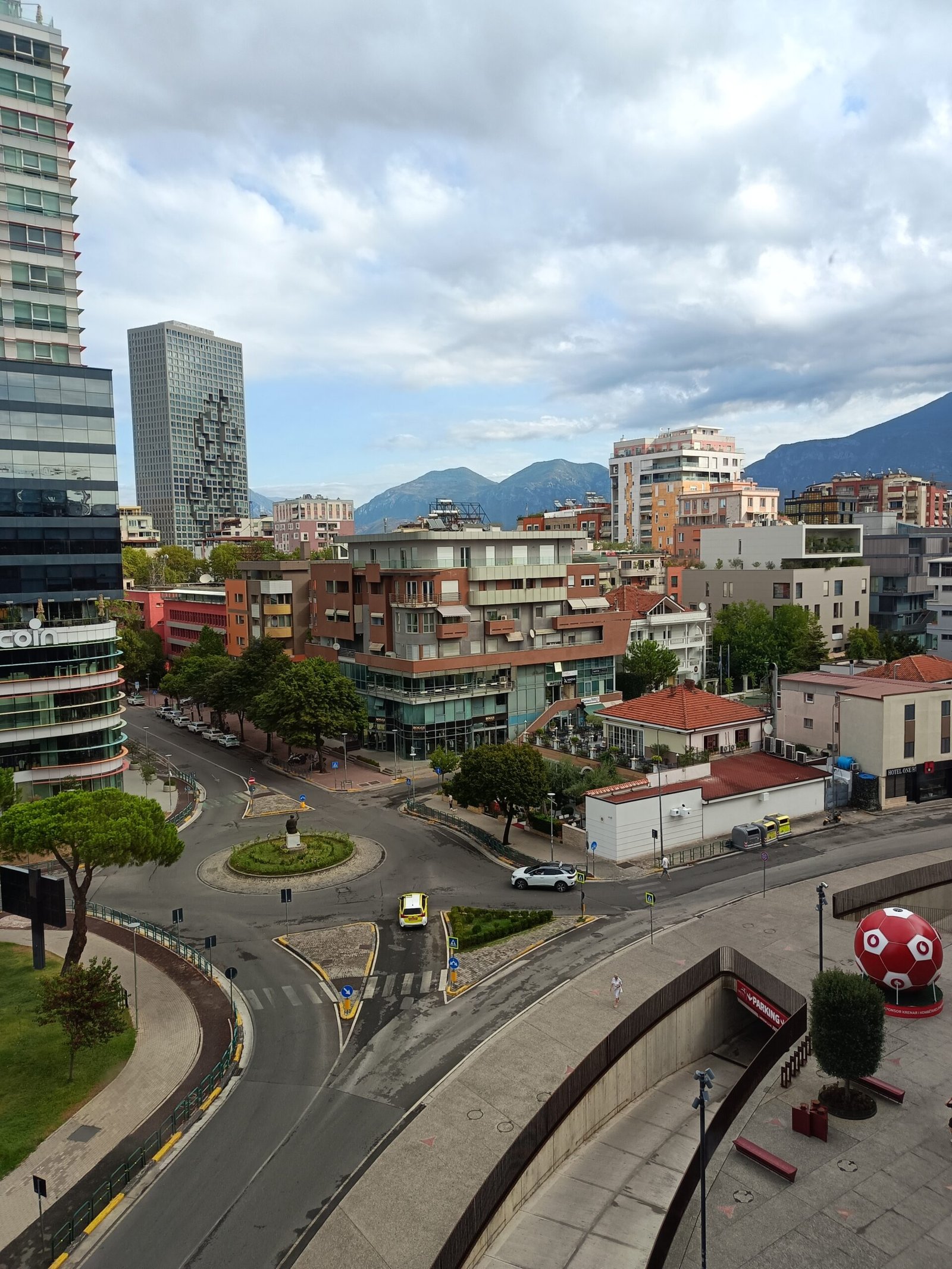
Later this year we may relocate to a more affordable country—a move that will give us space to pursue our creative projects, wander freely, and step away from the relentless grind of American hustle culture. I’m dreaming of a place where I can stroll to bustling produce markets, bakeries, and cheese shops, then settle into a café for hours—reading, writing, people-watching—without worrying about the cost of living.

Photo of Hana Cafe, Tirane, Albania – c/o Happy Cow.net

For me, this is a return to a lifestyle I’ve missed since leaving my hometown of Berkeley. Back in the ’80s, as a teenager, I roamed the city on foot, passing historic buildings, overgrown Mediterranean‑style gardens, and fruit‑laden trees. I spent endless afternoons in cafés, browsing independent bookstores and record shops, grabbing fresh meals at inexpensive local eateries, and catching foreign films at local art theatres. These moments became the cornerstones of a lifestyle I hoped to carry with me as I grew older. Looking back, I realize that what I loved most about those years wasn’t just the city itself, but the freedom of a daily life shaped by proximity, serendipity, and time—the same values drawing me toward walkable living abroad now.

Photo of Caffe Strada c/o SFList

Rent prices, however, began to skyrocket in the mid‑’90s, pushing me out of state and by the early 00’s – eroding that vibrant, walkable life. Now, as we prepare for the move, we’re in the thick of downsizing: selling select books, décor, furniture, and other household items we don’t want to spend thousands to ship overseas. It’s a painstaking, slow process—listing everything on Facebook Marketplace, eBay, and Etsy right after the holiday rush feels like an endless chore. Still, I keep boxing up books, posting shelves, and hoping each listing finds a new home.

The minutiae can be overwhelming. I wish I had an easier system, and I’d love for my friends to swing by and buy from me directly. In the weeks leading up to our departure, we’ll host an estate sale, but it would be liberating to clear out as much as possible beforehand.

As tedious as this process is, I try to remember what it’s making room for: mornings that begin with a walk to the market, afternoons spent lingering in cafés, and evenings shaped more by curiosity than exhaustion. Letting go of these objects is the price of reclaiming that rhythm. If I’m patient—and a little ruthless with my belongings—I might finally step back into the kind of everyday life that first taught me how to wander, observe, and create.

Midnight Brew: Reviving the Analog Night‑Life

How Late‑Hour Coffeehouses Can Reclaim the “Third Place,” Foster Honest Conversation, and Spark a New Creative Renaissance

I heard a story about a bar in Europe whose owner once forgot to restock beer for a night and ended up serving only espresso. He expected the crowd to leave, but they stayed. The atmosphere shifted: people became more aware, yet strangely calmer. After that night they kept coming back, asking for the same thing, and the owner eventually renamed the place Midnight Coffee. He stopped playing loud music, and he noticed that patrons no longer needed to shout. For many, it was the first time in years they’d spent an evening out sober, and they said they felt safer. Even though it was nighttime, the energy remained electric—but it was a different kind of electricity. Conversations grew more honest, and awareness rose.

I can’t verify that the story is true, but the message feels important. I remember a late‑night coffee scene from the ’90s, when the world felt very different and there seems now to be a collective yearning for a more analog experience.

Back then, night‑time cafés thrived. There were poetry readings, experimental acoustic sets, and free live music. Artists, musicians, and students of all ages mingled after work or class. People played chess, read, drafted zines or comic books, and wrote novel fragments. The cafés offered a refuge from home distractions—a place to socialize with strangers without the pressure of volume or intoxication.

Today, many of us are either cooped up at home all day or stuck at work from dawn to dusk. A $60 night out at a bar is out of reach for many, so we stay home, isolated. We’re growing weary of endless streams of bland, pricey corporate productions, of doom‑scrolling and mindless video ads. What we crave is a “third place”—neither home nor work—affordable, alcohol‑free, and gentle enough to let us decompress, create, and connect honestly.

Evening coffeehouses would be a welcome comeback. They could boost mental health, give college students and older teens a safe alternative to bars, and spark a creative renaissance. Imagine people gathering to collaborate on analog, in‑person projects: zines, comics, board games, RPGs, crafts, art, or performances. Young creators could meet outside the constraints of school curricula or formal programs. Older creators could take a break from their day jobs and home. Loud bars rarely foster this kind of spontaneous inspiration, but cafés have done it for decades.

What changed in the past 15 years? The rise of the internet and streaming, plus the trend of people occupying daytime cafés alone on laptops and phones, pushed many cafés to close earlier. Yet we seem to be at a tipping point: burnout from corporate media is running its course, and people are hungry for genuine connection and an affordable, analog space. If cafés began hosting late‑night poetry slams, low‑key live music, or a zine‑lending library, as small examples to get things started —they could ignite creative connection and authentic experiences that everyone seems to need right now.

NOTES:

If you enjoy my writing here, you might also like some of my other projects:

  • 💡 I have a Patreon where I share extra writing, behind-the-scenes notes, and updates on creative projects. You can check it out here.
  • 📖 I recently self-published my MA thesis on Butoh, which is available here. If you’re curious about performance, embodiment, and cultural history, I’d love for you to read it.
  • ☕ If you’d like to give a small one-time tip ($3), you can do so via Ko-fi here. Every bit of support helps and is greatly appreciated!
  • And as always – Please like and subscribe!

Walker-Ames Haunted House tour – Port Gamble, WA

Ghosts by the Water

We were recently invited by our friend — fellow goth and Tacoma real estate agent Benni Sack — to tour a haunted house in Port Gamble. The small historic town, surrounded by the waters of the Sound and home to only about 834 residents, boasts a number of downtown buildings rumored to be haunted.

After visiting, I was convinced it was because of how lovely the place is. Port Gamble is an enchanted patch of land, wrapped in water and filled with old trees and character. The historic houses, now art galleries, craft shops, cafés, and restaurants, were so charming I couldn’t blame the spirits for wanting to linger. That was my impression during the daylight, at least.

Our evening visit was to one of the area’s most haunted properties — the Walker-Ames House. Said to be home to a handful of family spirits, the property can be viewed by reservation. The ghosts are mostly benign, though sensitivities vary. For instance, I did not feel comfortable entering the basement, while others who did reported an unpleasant presence.

We were in good hands with our guide Paranormal Pete, who knows the resident spirits well. As we entered, we heard what sounded like playful children’s laughter echo through the hall. Some areas of the house are cordoned off as “ghost-only” spaces — a large upstairs closet, and the servants’ stairwell. Pete brought along an array of investigative tools for us to use, including EMF meters, dowsing rods, and a spirit box, which he later demonstrated to attempt communication with the unseen residents.

We walked through the house, once considered a mansion in its day, with spacious rooms designed for entertaining, fireplaces in nearly every bedroom, and a generous attic that once served as the nanny’s quarters and playroom for the children. The primary bedroom even boasted its own en suite bath and a small balcony overlooking the grounds, a rare luxury for the period.

In contrast, time has taken its toll. Much of the wallpaper is torn or missing, and the wooden floors creak underfoot with age. Restoring the home to its original grandeur would be prohibitively costly, a quiet echo of the family’s former status among the town’s most prominent citizens. I imagine the spirits have mixed feelings about it all, perhaps appreciative of the attention they still receive, yet impatient when visitors fail to show the proper respect for their historic home.

Outside the Walker-Ames House, other buildings in the area were said to host their own ghostly inhabitants: a former general store now home to a café, a small nautical museum, and a tourist shop among them. Across the street stood an old theater and post office, both known for unexplained activity reported by residents and visitors alike. There had once been a hospital nearby, and our guide suggested that some of its spirits may have drifted over when he opened channels of communication. Depending on the era and the illnesses that took their lives, some of these lingering souls did not seem entirely at peace.

As the evening faded into night, I left with the sense that the town’s spirits, like its people, simply loved where they lived. Maybe haunting, in some places, is just another word for staying home.

During Halloween season Pete offers regular Ghost Walks, and on Halloween itself there is Trick or Treating for children as well as a Ghoulish Gala in the evening. More information can be found here: https://www.portgamble.com/events-festivals/ Tickets can be procured on Eventbrite.

Paranormal Pete’s site for all his regular offerings including their annual Ghost Conferences is available here: https://www.portgambleparanormal.com/

NOTES:

If you enjoy my writing here, you might also like some of my other projects:

  • 💡 I have a Patreon where I share extra writing, behind-the-scenes notes, and updates on creative projects. You can check it out here.
  • 📖 I recently self-published my MA thesis on Butoh, which is available here. If you’re curious about performance, embodiment, and cultural history, I’d love for you to read it.
  • ☕ If you’d like to give a small one-time tip ($3), you can do so via Ko-fi here. Every bit of support helps and is greatly appreciated!
  • And as always – Please like and subscribe!

Help support this art blog and my artist father Robert Moore’s legacy project

I’ve been unpacking in batches my dad’s books that I moved up here since his passing. Sometimes I come across a book with his annotations. Whether it be an art book on color theory or a book by Baudrillard…He would sometimes write down words he liked and what pages they were on, he would note the month and year above the list, other times he’d write notes reacting to passages. It’s almost like having a conversation with him.

When I am able I want to develop a website to showcase his art and ideas.

I have boxes of his art notebooks. It’s going to be a big task because he had very unique and ambitious abstract ideas, that usually followed complex geometric and musical logic.

If you would like to support this work as well as this blog where I review local art exhibits and other creative spaces, please consider becoming a Patreon member!
https://www.patreon.com/c/visualculturecaffe

Tacoma Art – The Gritty Show at the Tobin Gallery

Running through Sept 12th at the Tobin Gallery at 924 Broadway in Tacoma is an art exhibition of over a dozen local, Tacoma artists – The Gritty Show. It’s a diverse collection of painted and sculptural works reflecting the rich and varied talents of Tacoma artists.

Aaron Artis’ piece SkateboART depicts a skateboard and what resembles a basketball, in an abstract, expressionistic manner with the fluid quality reminiscent of zen calligraphy. The movement in this piece is celebratory and the bold shapes are playful.

Aaron Artis @aaron253artis – SkateboART, 2022

Hadiya Finley’s No Bull in the Bushes, Girl, is a striking bronze sculpture of a female form peering out from behind a bush. Is it a comment about stepping back and opting out of BS, seeking refuge in nature or a feminist double endendre? It’s a beautiful composition with elegant, elongated forms.

Hadiya Finley @hadiyafinley – No Bull in the Bushes, Girl – 2019

James Junio’s work calls to mind the vibrant, energetic quality of Basquiat’s work – it’s a similar combination of abstract expressionism with urban subject matter from a Black experience. Fork in the Road communicates the energy of youth, buzzing with ideas, drive, surrounded by fiery forces.

James Junio @hoonwiththespoon – Fork in the Road, 2024

Matt Zimmerman’s He Found a Use for the End of the Rope – is a bold, abstract, expressionist piece with tremendous activity and interplay between strong colors. The strokes of black, orange, golds sit dramatically on top of the work. The layers of color, their shape and spatial relationships give so much to think about.

Matt Zimmerman @matzzipaints – He Found a Use for the End of the Rope, 2024

Splatter Galaxy by Amerlynn Elizabeth Cox pulls you in to its universe of colors. There are so many zones of activity, areas of light and dark, rivers of blue light, it’s tempting to become lost in its rich cosmos.

Amberlynn Elizabeth Cox @artbyamberlynn.com – Splatter Galaxy, 2022.

Come on out to view these and many other works by Tacoma artists, through Sept. 12th at the Tobin Gallery downtown on Broadway.

The space is shared by Mad Hat Tea Co – where you can purchase high quality green teas, black tea blends, and herbal teas. He even carries Pu-erh tea – a special fermented tea from China with antibacterial and anti-inflammatory properties.

924 Broadway
Tacoma WA 98402
253.302.2046

Ai, Rebel – at the Seattle Art Museum

From smashed urns to marble surveillance cameras, Ai Weiwei’s Ai, Rebel dares viewers to confront systems of power. On view at SAM through Sept 7.h September 7, 2025
*Warning: this post contains imagery and references to strong language.

Now on view at the Seattle Art Museum is Ai, Rebel, a sweeping retrospective of over 100 works by exiled Chinese artist and activist Ai Weiwei. Spanning four decades, the exhibit is the largest U.S. presentation of his career to date.

Ai Weiwei is a provocateur—an agitator of political regimes and artistic traditions alike. One of the first things you encounter upon entering the show is a towering neon sign that simply says: Fuck (2000). Beneath it, a series of photographs depict Ai giving the finger to iconic sites of authority: Tiananmen Square, the Eiffel Tower, the White House.

“Fuck” (2000)

In front of these images stand three gleaming sculptures of his upraised arm and hand, middle finger extended—Middle Finger (2000)—cast in gold and other luxurious materials associated with prestige and wealth.

Middle Finger (2000).

Ai’s practice spans sculpture, photography, video, and installation. But across these varied forms, a central theme emerges: the relentless questioning of power—be it the Chinese Communist Party, the institution of art itself, the machinery of capitalism, or even the American government. One of the most striking pieces in the exhibit is a monumental, floor-to-ceiling replica of the first page of the Mueller Report. In front of it sits a surveillance camera carved in marble, an elegant monument to the aesthetics of control.

Fragment of the Cover of the Mueller Report (2019)
Surveillance Camera (2010) 

Everything is art. Everything is politics,” Ai famously declares. That mantra is not theoretical for him—it’s lived. Born in Beijing in 1957, Ai grew up in the far northwest of China, where his father, renowned poet Ai Qing, had been exiled during Mao’s Anti-Rightist Campaign. “The whirlpool that swallowed up my father upended my life too,” Ai once wrote, “leaving a mark on me that I carry to this day.”

Ai spent the 1980s in New York, absorbing the influence of Duchamp, Warhol,, and Jasper Johns. He returned to China in the early ’90s to care for his ailing father and became a central figure in the burgeoning experimental art scene. He co-founded the Beijing East Village artist collective, co-published books documenting their work, and later launched the architecture studio Fake Design. In 2000, he co-curated the infamous Fuck Off exhibition in Shanghai with artist Feng Boyi.—a direct rebuke to state-sanctioned art.

In China, Ai’s work increasingly took aim at government corruption and censorship. Following the 2008 Sichuan earthquake, which killed thousands of schoolchildren due to substandard building construction, he launched an independent investigation. He responded artistically by assembling thousands of children’s backpacks into installations that spell out haunting messages. At SAM, these backpacks appear suspended in the air, forming a serpent-like dragon—both memorial and protest.

In 2011, Ai was arrested by Chinese authorities and held without charge for 81 days, allegedly for tax evasion. A self-portrait of his arrest—meticulously assembled from Lego—appears in the exhibit, as does a full-scale replica of the prison cell where he was held.

Self-portrait of Ai Weiwei’s arrest, assembled in Lego.

At first glance, the cell might seem spacious by U.S. standards, with a table and adjoining bathroom. But the reality was grim: he was under constant surveillance, confined indoors 24/7, with two guards stationed inches from him at all times. He needed permission for basic actions, like drinking water. The light never turned off.

Replica of Ai Weiwei’s prison quarters while he was detained.

Also featured are some of Ai’s most iconic and controversial works. Dropping a Han Dynasty Urn (1995) documents his deliberate destruction of a 2,000-year-old artifact—a symbolic challenge to the fetishization of cultural relics.

Dropping a Han Dynasty Urn (1995)

In Neolithic Vase with Coca-Cola Logo (Gold) (2015), he brands an ancient vessel with the Coca-Cola logo, merging historical significance with global capitalist critique.

Neolithic Vase with Coca Cola Logo (Gold) (2015)

Grapes, made of 26 hand-crafted wooden stools from the Qing Dynasty, speaks to the erosion of traditional life under mass production. These stools—once common in Chinese homes and passed through generations—have been replaced by cheap plastic imitations. The piece is both a lament and a celebration of communal memory.

Grapes – made out of 26 stools from the Qing Dynasty (1644-1911)

In Forever (2003), Ai assembles dozens of steel bicycles—once a symbol of everyday mobility and collective identity in China—into a dense, architectural lattice. The bikes are uniform, industrial, and tightly interlocked, yet crucial steering mechanisms are removed. The result is a striking contradiction: an object designed for movement becomes rigid, static, and nonfunctional. More than a commentary on modernization and the decline of bicycle culture, the piece suggests a deeper tension—bodies bound together in shared purpose or system, yet stripped of direction or agency. It’s a haunting metaphor for life under authoritarian rule, where collective unity is enforced at the cost of individual will.

Forever (2003)

Throughout the exhibit, Ai Weiwei’s work insists on critical reflection. What does it mean to be Chinese under the CCP? What does it mean to exist within—or resist—global capitalism? Where do these systems conflict, and what do they conceal? Whether blunt or poetic, Ai’s art exposes the fragile scaffolding of power and the contradictions we’re often asked to accept.

Additional resources

The Seattle Art Museum has shared an interview with Ai Weiwei discussing his works, what it means to be a ‘rebel’, and why art is relevant.

Art Historian Rebecca Albiani discusses his biography and several of Ai Weiwei’s work for a talk for Horizon House.

Ai, Rebel is on view at the Seattle Art Museum through September 7, 2025—a rare opportunity to experience the full scope of Ai Weiwei’s fearless, boundary-breaking work in one place.

Victor Burgin on Dematerializing the Art Object: Capitalism, Critique, and Conceptual Space

A reflection on Victor Burgin’s art theory, semiotics, and the enduring value of rereading images in a capitalist art world.

Revisiting Victor Burgin and the Art of Rereading Images

Recently, I found myself reflecting on how formative Victor Burgin‘s lectures were during my Art History studies at UC Santa Cruz in the 1990s. Burgin—a conceptual artist and theorist trained in psychoanalytic thought—introduced our class to the world of semiotics, Lacanian psychoanalysis, linguistics, memory studies, and the intriguing concept of teletopology. He spoke in a calm, intellectual London accent—reminiscent of David Bowie’s—not just soothing, but layered with meaning.

For his course, I wrote a paper analyzing the work of Japanese fashion designer Yohji Yamamoto as portrayed through Wim Wenders‘ film Notebook on Cities and Clothes.. It was a creatively rich time in my early 20s: sitting in a dark, Italian-style café, drinking pint glasses of coffee, reading Baudrillard and Virilio. contemplating the layers of meaning in visual and cultural texts.

In the piece TateShots – Burgin states:

“I felt that there were already enough photographs in the world. There’s no point in making any more images – What we need to do is re-read the images we already have.”

This idea resonated deeply, especially in light of the Tacoma Art Museum’s curatorial practice—juxtaposing its Haub Family Collection of Western American Art with contemporary works and critiques. Their exhibitions exemplify Burgin’s call to reinterpret and recontextualize the visual archive.


On the Dematerialization of the Art Object

Burgin also addresses the conceptual, creative act as well as something that has for him evolved from photography, to the moving image, to 3D computer modeling – as each relates to an understanding of a psychological object or space.

In TANK Book Talks with Leslie Dick he brought up a particular provocative view about the parameters of the art object, particularly when we are wanting to challenge the confines and limitations of capitalism. He describes the ambition of 60’s conceptual art and Lucy Lippard and others’ goals to “dematerialize the art object” out of “flight from the commodity form.” Burgin critiques how contemporary art has increasingly become “a parking lot for money” for the elite—arguing that the market’s grip has “entirely wiped out contemporary art.” He raises questions about capitalism’s impact on meaning-making, and what remains of artistic autonomy under such conditions.

Conceptual Objects and Psychological Realities

He then goes on to describe the relative immaterialality of digital art objects, when considered through through an understanding of the ‘psychical object‘ having as real a reality as any other form of reality. From psychological theory he describes how a fantasy can have as real of an impact on the body as a real event. He describes how there can be (art) objects without physical materiality. He then goes on to describe in scientific terms then how the associated network around a conceptual work becomes a characteristic of that work. “So you define an object in terms of all its dimensions, all its aspects.”

Burgin goes further in discussing epistomological studies about objects being the spatial intersection of multiple disciplines or perspectives. There’s object, complex object, and integrative object. This ‘contemporary’ object is temporal because the perspectives, contexts, projects brought to it in one period of time will all change during another period of time. Burgin feels this understanding is incredibly important to the process of art criticism.

On this Father’s Day, the first since my father has passed, I think about these things in lieu of our experiences discussing art, the art making process, and the art analysis process.

Art is never just about an isolated final result – the process of ideation, of researching and reacting to others approaches and takes, of note-taking and discussing, of experiencing a work within a particular dynamic moment in time….the process of building up of ideas and working off of earlier ideas….all these are just as important to understanding the ‘complex art object’ as the material final result. An absence of any particular materialized final result does not negate the network of creativity involved in building the conceptualization or approach. The lines between philosophic or psychoanalytic theory and artistic theory are thin….yet of only one the market requires a physical manifestation.

Afro Butoh film & performances – Tacoma Armory

Kicking off the three-part series Butoh Art Attack Tacoma, a free screening was held on May 17 at the Tacoma Armory , showcasing three films by South African Butoh artist Tebby Ramasike.. Although he was unable to attend in person due to visa issues, the audience was treated to recordings of three of his powerful performances.

Following the films, the evening continued with two live performances. The first was by dancer Helen Thorsen, a founding member of Seattle’s Dappin Butoh and Yuni Hoffman Dance Theater. Thorsen is currently the managing director of Seattle’s DAIPANbutoh Collective. Viewing dance through a therapeutic lens, her background spans disciplines including Butoh, yoga, Tai Chi, and more. She also served as the evening’s emcee, introducing Ramasike’s work and contextualizing the recordings.

The second performance featured Lin Lucas an African-American dancer from Earthseed Rising in Tucson, AZ. Through Butoh, art and dream work he engages in ancestral lineage healing. He is also a comic book creator and writer of short stories, screenplays, and poetry.

Each of the live performances were accompanied by the Seattle-based, experimental violinist Jackie An, a neurodivergent, non-binary, Korean-American artist whose musical and empathic talents enhanced the improvisational collaborations. All three performers participated in a post-show discussion that was both invigorating and thought-provoking.

Reflections on Ramasike’s Films

The first work by Ramasike was a selection from “In the Shadow of Darkness”, filmed at the Sesalac Butoh Retreat in Serbia. The video can be viewed on YouTube here. Watching the performance, set against an experimental musical backdrop, I was reminded of Butoh’s origins—born in postwar Japan as an embodied expression of trauma, tension, and release. It’s a form that summons pain, processes it somatically, and purges it.

Hijikata Tatsumi’s original Butoh drew influence from German Expressionism and Antonin Artaud’s Theater of Cruelty, as well as Japan’s subconscious—its folklore, spirits (Yokai), and native shamanic traditions.

The second video was incredibly moving – it was a selection from “The Wreakage of My Flesh”, performed at the Musee National de la Resistance Esch-Sur-Alzette, which preserves the memory of Luxembourg’s victors of the Nazi Occupation. The full recording can be found on YouTube here.

In this piece we see figures suspended in what resemble amniotic sacks. A dancer on the floor writhes in a similar sack and struggles to break free. The room has bars on one wall, like a prison. The African figure breaks free and still writhes in pain, attempting to reach out to the remaining, suspended figures. There are phrases on the wall: “I am alive and I am dead”…and “…never return from Auschwitz”. A European figure appears, gently placing a white cloth over him—perhaps an act of comfort, though the gesture is ambiguous: Is it care, or another form of entrapment?

The last one was “In Search of a Soul: a Blind man’s cry….the appeal” – which was performed at a Butoh festival at Espace Culturel Bertin Poiree de Tenri, in Paris. A copy can be viewed on YouTube here but the film is a bit grainy. In this work we see the dancer performing in what appear to be a pile of dried, golden leaves. He dances frantically, showering himself with the leaves. He thrashes and throws his body about, as if aggressively seeking stimulus from a world he cannot see.

The Live Performances

Helen Thorson’s performance was entitled “Kintsugi” – named after the Japanese art of taking broken pottery and mending it with gold as a meditative act of transformation. Her dance was inspired by the release of Lenord Pelitier after 40 years in prison. This piece was heavy, intense, unpredictable, and frightening. A figure slowly crawls out of a room, still dragging chains attached to their feet. The figure struggles to stand and move about, as if fighting to re-learn how to live in a world outside.

Lin Lucas’ piece was entitled “Blind at the Gates of Grief”, served as an exploration of loss and desire. He drew influence from Butoh founder Tatsumi Hijikata’s “Blind Girl” and Francis Wellers’ book From the Wild Edge of Sorrow: Rituals of Renewal and the Sacred Work of Grief.

Each station, illuminated by a single candle, marked a passage—love, desire, grief. At each point he embodied the various struggles, before collapsing and snuffing out a flame. At one point, he dug dirt from a beach bag and covered himself with it. At another, he cradled a bouquet of roses, then tore them apart, sparing one, which he inhaled deeply before extinguishing that station’s light with the very rose. Each moment unfolded with raw beauty and sorrow—expressions of grief and longing beyond language.

Final Thoughts

During the closing discussion, two powerful themes emerged. First, that Butoh is a profoundly therapeutic practice—one that helps people access and process trauma held within the body. Second, much of Butoh operates on a pre-verbal, primal level—expression that comes before language, or even thought. One story recounted an artist bringing Butoh into a prison, where over time, participants found they could access deep-seated traumas—eventually finding the words to describe them, thanks to the embodied work that came first.

Helen Thorsen will offer a free Butoh workshop at the Tacoma Armory on May 24, from 1–3 PM.

Fresh Ground Butoh Dances will perform on May 31 at 8 PM, also at the Tacoma Armory. Tickets are $20, and the show will feature six dancers accompanied by three musicians.